
Introducing
The Reset
A method for understanding and recovering from neurodivergent burnout
The workbook and audio series for making sense of neurodivergent burnout, so you can understand what has actually been costing you and what needs to change, without the time off you can't afford to take.
If you're neurodivergent and running on empty, or you've been here before and can't work out why you keep ending up back in it, and you find yourself saying "I'm absolutely burnt out, and I can't afford to take time off" - this is for you.
£27 | Instant access | Lifetime access | 7 day money-back guarantee
"this whole thing felt like it was written for me... thank you!" Jess, early reader of The Reset
Real talk
Here's a hill I'll die on:
Understanding your burnout will do more for you than any amount of trying to fix yourself.
In fact, understanding is the bit most burnout advice skips entirely. It goes straight to what you should be doing differently. Rest more. Take some time off. Set better boundaries. Have you tried meditating?
All of which assumes you already know what you're dealing with.
Most people don't.
Most people arrive at burnout with questions, not a diagnosis. Why is everything so much harder than it used to be? Why am I this tired when I haven't even done that much? Why can't I seem to get myself together?
And when nobody answers those questions, people answer them themselves. Usually unkindly. They decide they're lazy. Or disorganised. Or failing. Or that everyone else is coping better.
There's a reason nobody has answered them properly yet.
Nearly every burnout resource out there is written for somebody with slack in their life. Somebody who can take six weeks off. Somebody who can drop things and pick them up later. So you read it, and you think none of this is available to me, and you add that to the list of things you're apparently failing at.
Then there's everything else.
A lot of what is out there isn't written by anyone with clinical training. Breathing exercises and visualisations. Things you have almost certainly already tried, presented as though burnout is a technique you haven't learned yet.
If you've already paid for something like that and found there wasn't much in it, that isn't a reflection on you.
And if that wasn't reason enough to pay attention...
- Almost every neurodivergent person I have worked with is in burnout, or has been at some point. It is one of the biggest issues neurodivergent people face and one of the least well explained
- What you need at 15% capacity is completely different from what you need at 60%, which is exactly why one-size-fits-all advice keeps failing you
- Burnout very rarely appears out of nowhere. There are usually signs months before it gets bad, and they can be learned
- You can start responding to this without changing your job, your income, or the people who depend on you
- And understanding what has actually been costing you tends to change more than criticising yourself ever has
"The number of options and providers made finding the right person challenging, especially with more media coverage of unlicensed or unqualified assessors. Someone found Emily on Instagram and sent her profile to me, and I was relieved to read her content and to have found someone with HCPC registration."
Google review
But here's the part that actually hurts.
You are trying as hard as you can. Everyone around you thinks you're fine, and you feel like you're failing at being a person.
Right now you might be counting down the hours until you can lie down again. Getting through the working day on everything you've got, then getting home with nothing left for the people you actually care about. And starting tomorrow further behind than you started today.
AND on top of that:
- You might be reading the same message for the fourth time and still not replying, and having no idea why something that small feels so impossible
- You might be booking annual leave to recover from a work event, or doing your actual work at 10pm because the office made it impossible, and telling nobody about either, because from the outside you look like you're managing perfectly well
- And really wanting to be more present for the people you love, but not being able to get there, because everything you have is already going into getting through the day
And all this?
Has probably got you feeling frustrated with yourself. Or disappointed in yourself. Convinced that everyone else is coping with life better than you are.
And no closer to working out how to stop ending up back here.
Or even worse? Starting to wonder whether this is just who you are now. Whether the capable version of you was the exception, and this is the real one.
It doesn't have to be like this.
Burnout isn't something that happens out of nowhere. There are reasons it shows up. And once you start to understand those reasons, you can begin making changes that actually help.
Why this is different
What if you could understand what has actually been happening to you, and know what to do about it, without waiting for time off that isn't coming?
I'm Emily. I'm a clinical psychologist, and I've spent the last six years working with neurodivergent people, offering ADHD and autism assessments and therapy.
I've lost count of the number of times somebody has sat in front of me, part way through an assessment, and said some version of "I know it sounds ridiculous, but answering one email feels impossible."
They almost always say it apologetically. Like they're braced to be told they're being dramatic. They're not being dramatic.
I built this because of something I noticed about almost everyone I have ever worked with.
Almost every neurodivergent person I've worked with is in burnout, or has been at some point.
And most of them had no idea what to do about it, or how to stop it happening again and again. I'd go as far as to say it is one of the biggest issues neurodivergent people face, and one of the least well explained.
So I took what I actually talk through with people one to one, and built it into something you can use on your own, at whatever pace you've got.
That's the Survive, Stabilise, Sustain Method.
The reason it works is fairly simple. What helps when you're deep in burnout is completely different from what helps once things have settled a bit. When you're in survival mode, understanding is far more useful than action. Most people don't need another plan at that point. They need an explanation for why everything suddenly feels so difficult.
Almost everything else out there hands you one set of advice and assumes everyone reading it is in the same place. This meets you where you actually are.
And it's the difference between getting through this one, and understanding it well enough to see the next one coming.
P.S. If you get in there and it turns out not to be for you, there's a full refund within 7 days 🧡
The method
Here are the three steps that make The Reset different from anything else you've tried:
STEP ONE
SURVIVE
For when everything feels too much and you're just trying to get through the day. Nothing here asks you to fix anything. The focus is working out what you actually have available right now, dropping what can be dropped, and getting through the week without things getting worse.
STEP TWO
STABILISE
Once there's a bit more breathing room, you can start making sense of what's been happening. This is where you find your own pattern, learn to recognise your early warning signs, and start seeing what has been costing you far more than you realised.
STEP THREE
SUSTAIN
Recovery isn't about getting back to who you were before. For a lot of people, that version was only functioning by pushing far beyond what was sustainable. This step is about understanding what brought you here and working out what needs to be different, so you end up with a life that fits you rather than one you're constantly adapting to.
Most people don't move neatly from one step to the next. You might feel like you're stabilising one week and back in survival mode the next. That's completely normal, and this is built for that.
And I've taken all of it, everything I talk through with people one to one, and poured it into a workbook and audio series you can work through at your own pace, without needing the time off you can't afford to take.
Imagine how it will feel...
From where you are now, to where this takes you.
If the "to this" sounds like something you want, then...
You're invited to
The Reset
Understanding and recovering from neurodivergent burnout
Everything I'd talk you through if we were sitting down together, built into a workbook and 10 audio episodes you can use at whatever capacity you've got today.
What's inside
Here's what's inside...
The Reset Workbook
The workbook walks you through all three steps, Survive, Stabilise and Sustain, using the reflections, tools and check-ins I actually use with people. Work through it in order, or open it at whichever step you're in today.
Inside you're getting:
- The Capacity Thermometer, so you can see what you have available today rather than measuring yourself against what you managed six months ago
- The ADHD, autistic and AuDHD burnout traps mapped out separately, so you can find the pattern that's actually yours
- An Early Warning System you build for yourself, so next time you notice it at week two rather than month five
- The Reduce The Cost tool, for when you cannot reduce the demand, because the job and the children and the bills aren't negotiable
- A Rules Audit that surfaces the rules you're still following, the "I should be coping" and the "rest is lazy," and helps you soften them into something that fits where you actually are
- Daily check-in pages for survival mode and for stabilising, so on the worst days there's one page asking you four questions rather than a blank one
- Your own written Burnout Response Plan, made while you have the capacity to think clearly, so you're not trying to invent one while exhausted
The Survive, Stabilise, Sustain Audio Series
Brain fog and concentration are two of the first things to go in burnout, which is a bit of a problem when almost all the help out there is something you have to sit down and read. So the whole method comes as audio too, in a private feed you can listen to on the go, via your preferred podcast app.
You're getting:
- Start Here, so this doesn't become another thing you have to do well
- Why Does Life Suddenly Feel So Much Harder?, the explanation nobody has offered you yet
- Why Neurodivergent People Burn Out Differently, so you can stop measuring your effort against somebody whose day costs them a fraction of what yours costs you
- Why Rest Feels So Difficult, for when you've finally taken the time off and still feel awful
- Understanding Your Burnout Cycle, so you can see the pattern you keep repeating and work out where to interrupt it
- The Story You've Been Telling Yourself, on the self-criticism that turns up alongside burnout and makes it so much harder to recover from
- Working With Reduced Capacity, the one for when you can't pause your life while you get better
- Building A Life That Fits, on what comes after, and why going back isn't the goal
- Where Do We Go From Here?, the whole method pulled together
- Plus Bonus audio: If You're Running On Empty Today, for the days you can't manage anything else
And one more thing, included 🧡
Scripts For Protecting Your Capacity
If you've ever spent three days drafting a text message because you couldn't work out how to say the thing without feeling guilty about it, this one is for you.
It's every script I find myself giving people. Each one comes in two versions, something you can say out loud and something you can send, because those are rarely the same thing.
You're getting:
- Scripts for buying yourself time, so you stop agreeing to things before you've checked whether you can actually do them
- Scripts for saying no, including the ones for when you haven't got a reason you think is good enough
- Scripts for cancelling, including cancelling again when you already cancelled last time
- Scripts for work, from asking for longer on a deadline to going off sick
- Scripts for family, for the conversation where you say something different to what you've always said
- Scripts for pushback, for the moment somebody says "but you used to manage this"
A look inside
Have a look inside before you decide.
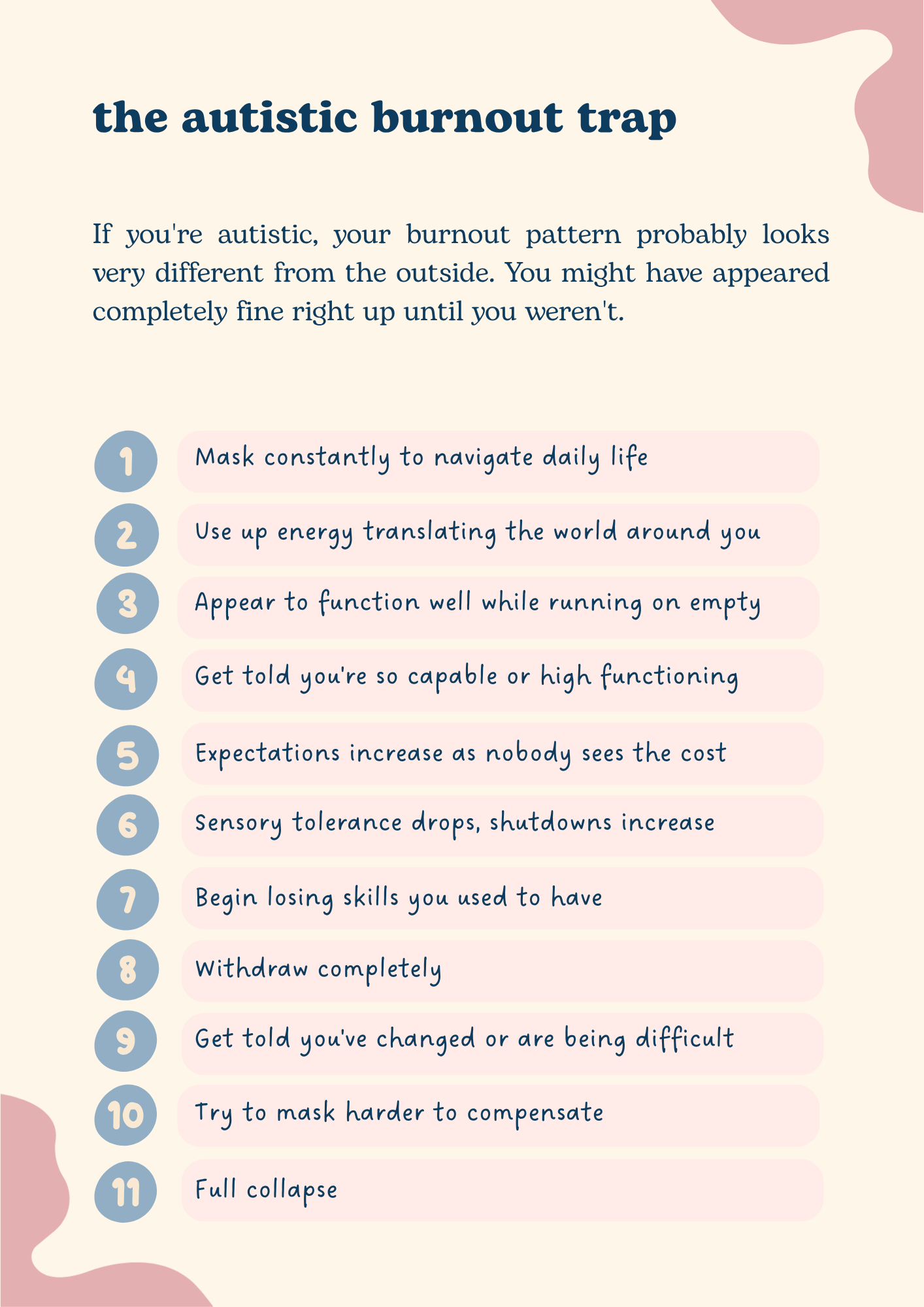
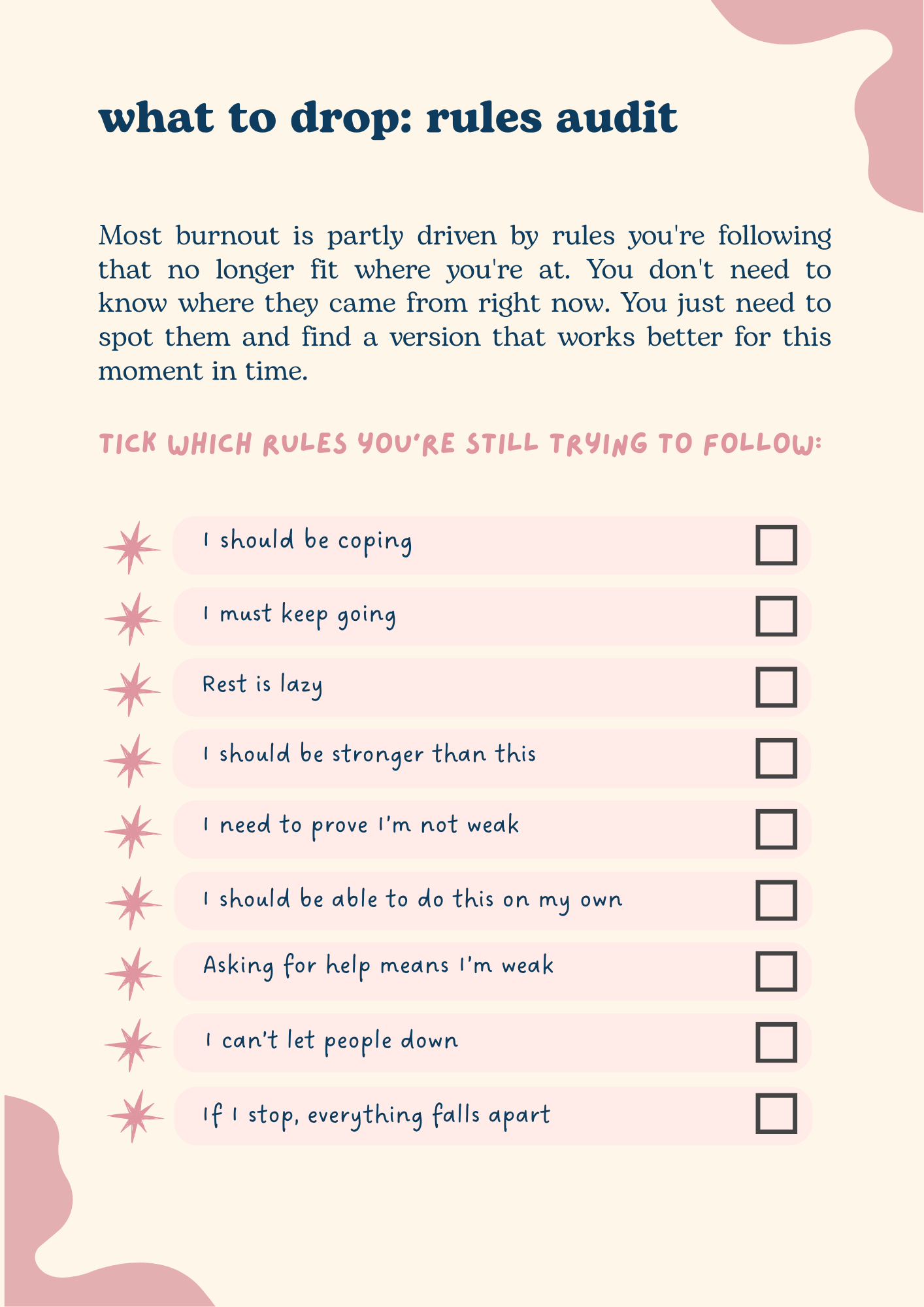
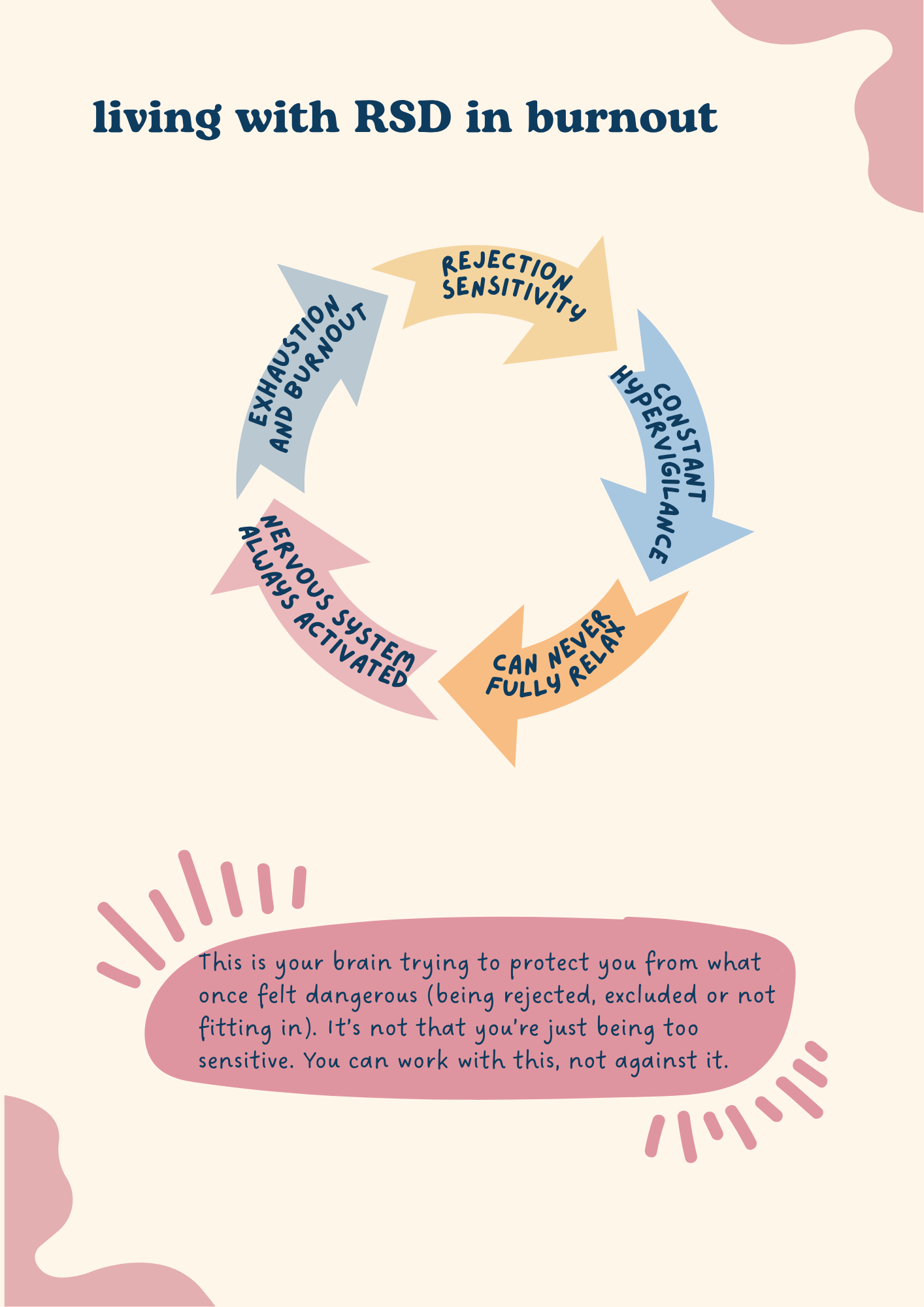
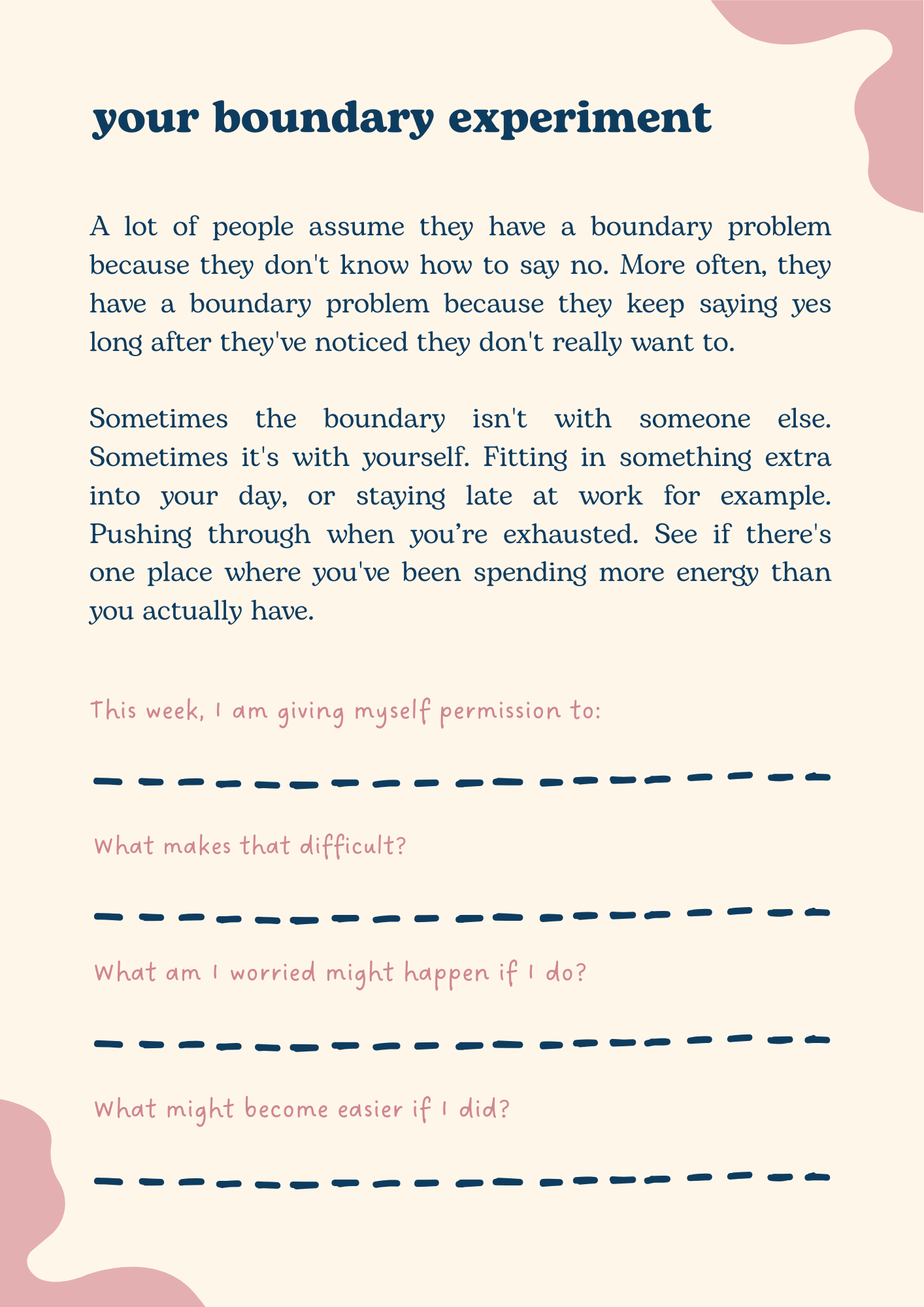
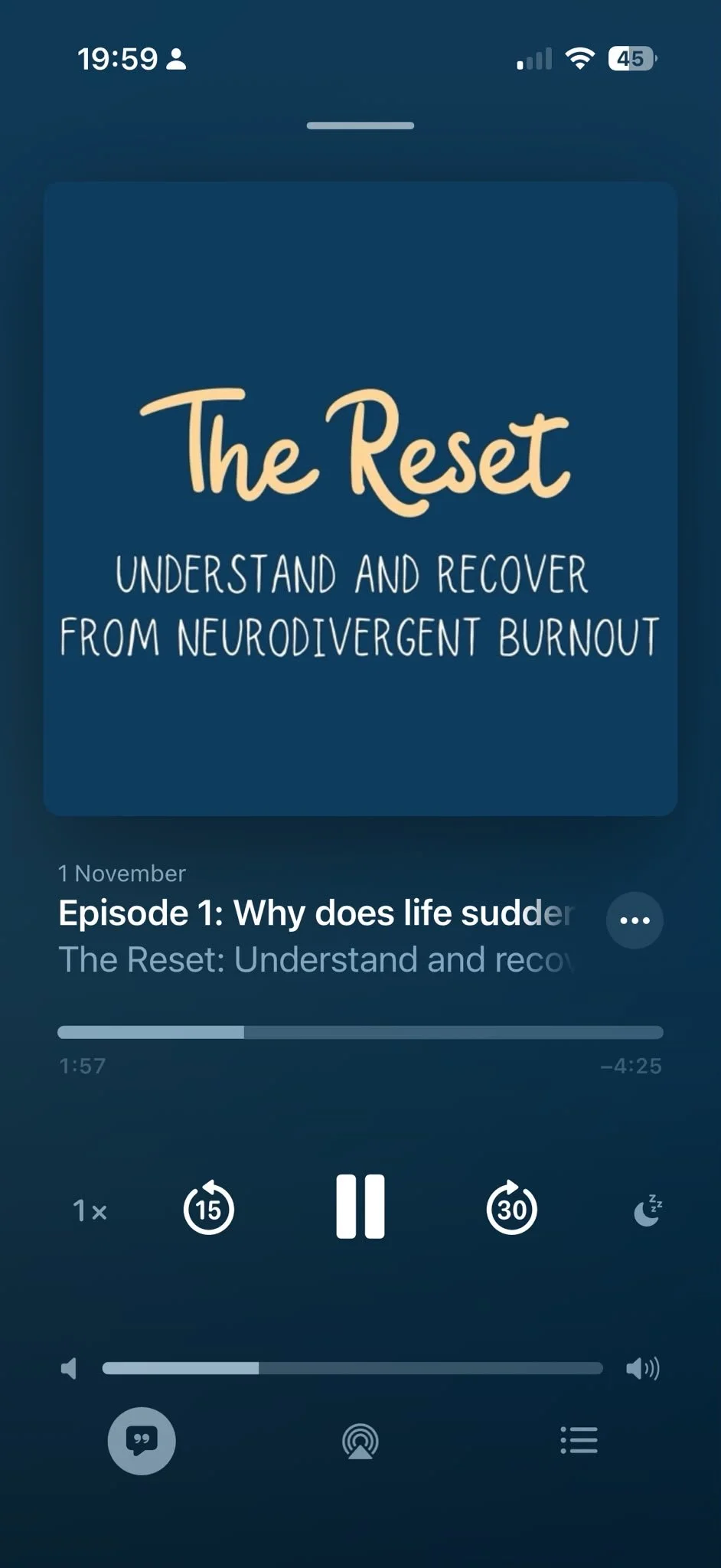
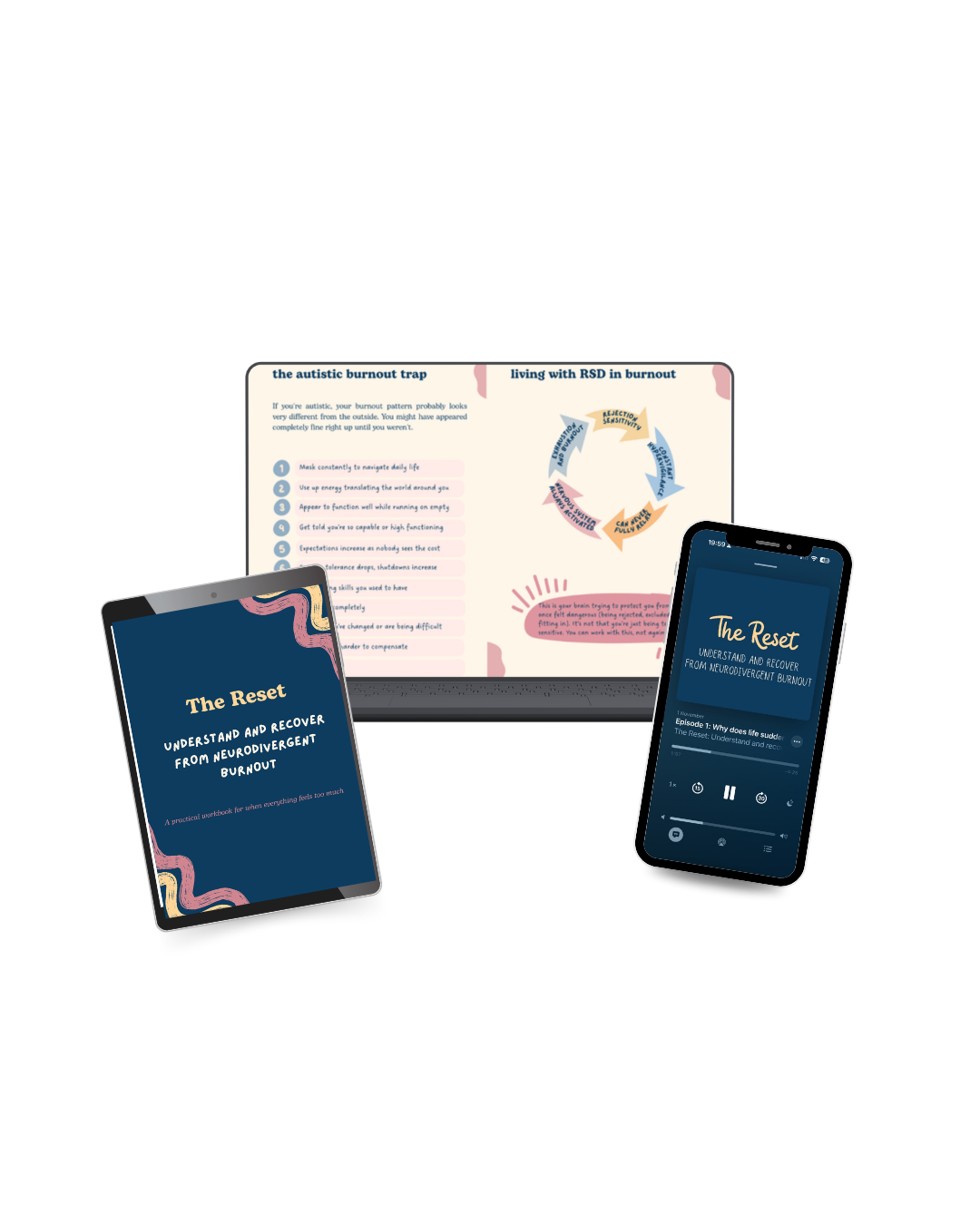
A few of the 89 pages, and the audio on your phone.
So why am I the right person to help you with this?

Hi, I'm Emily! (or Dr Compton-Smith, if we're being formal about it... we aren't). I'm a clinical psychologist, and I'm neurodivergent.
Before running my own practice I worked in the NHS, first in an adult ADHD and autism assessment and therapy service, then in a children and young people's neurodevelopmental service.
I hold a Doctorate in Clinical Psychology from the University of Leicester and I'm registered with the HCPC (PYL039965).
I've now carried out hundreds of assessments.
I don't think neurodivergence is a disorder, and I don't think you need fixing.
I think understanding yourself will get you further than criticising yourself ever has, and most people have never been given the chance to do the first one.
I hope you come out the other side a bit less convinced that the problem is you.
What people say
From early readers, and from people I've worked with.
The Reset is new. The first two are from people who read it before launch. The rest are Google reviews from people I've worked with, not about the workbook itself.
"Without feeling overwhelmed or pressured to keep up"
"I've really enjoyed listening to The Reset. I love being able to take in the advice and information in short, manageable bursts, a bit like listening to an audiobook, without feeling overwhelmed or pressured to keep up. The content is thoughtful, reassuring and easy to grasp. It's refreshing to have something so understanding and helpful that you can dip in and out of at your own pace. Highly recommend!"
Charlotte, early reader
"It gets rid of all the noise"
"reading through this I thought yes! that's what I need to do, that's how I'm going to handle it. It gets rid of all the noise"
"what I found so useful is that it explains why I might feel a certain way about some things that I could never understand why i felt that way before. This explains why i might feel a certain way, helps me understand how i can cope with it, so all the guessing I don't need to do because it's all there!"
"I keep checking in on myself and my boundaries and this is helping me to regulate myself which is keeping me much calmer"
Jess, early reader
"It was the release of many, many years of frustration"
"My eventual diagnosis changed my life. I no longer feel like I'm underperforming at being a human being, just that my brain is wired differently. It was the release of many many years of frustration and upset. Emily is kind, understanding, and a good listener. I've never felt as accepted as when I was being spoken to."
Mat, Google review
"She sees beyond masking that's been established over decades"
"I was able to express profound and complex issues or struggles that, until not so long ago, I didn't even have the words to explain. Especially for late-diagnosed autism, she has a particular deftness in seeing beyond masking that has been established over decades. My diagnosis was quite a profound pivotal point in my life."
Kelsey, Google review
"It felt like a conversation, not an exam"
"Emily was incredibly professional, compassionate and supportive throughout, which made the assessment and the questions much easier. It felt like a very normal conversation about my life, rather than an 'exam', which is what I'd initially feared."
Charlie, Google review
"I felt heard, which mattered given how sensitive it was"
"Dr Compton-Smith made me feel comfortable enough to speak openly about my life and the experiences that had brought me to the point of assessment. I never felt rushed to answer, and I felt heard, which was important to me given the sensitive nature of the conversations. Her passion for people and her work shone through in every session."
Donna, Google review
"A very containing and reassuring experience"
"A thorough and considerate assessment with a warm and curious approach. I felt as though my perspective and experience were valued highly, while also confident that the outcome would reflect her honest, professional judgement. A very containing and reassuring experience for me."
Bethan, Google review
The price
Everything in here comes out of the conversations I actually have with people one to one.
This isn't therapy and it won't replace it. It's the understanding part, in a format you can use on your own, at a price that doesn't ask you to commit to anything.
I've priced it at £27 because being able to access proper support is a privilege, and for a lot of people 1:1 support isn't accessible right now. I'd rather these conversations reached further than my diary allows.
Instant access | Lifetime access | 7 day money-back guarantee
If it's not for you, you get your money back
7 days · No questions · Full refundYou've possibly paid for something like this before and found there wasn't much in it. So I'd rather you didn't have to gamble.
Buy The Reset, download everything, listen to the audio and have a proper look. If within 7 days you decide it isn't for you, email me and I'll refund you in full.
You don't need to explain why. Given that a decent chunk of this workbook is about not having to justify yourself, it would be a bit odd if I asked you to. 🧡
Is this for you?
Wondering whether this is actually for you? Have a look.
- You're neurodivergent, whether that's diagnosed, awaiting assessment, or something you've worked out about yourself
- You're exhausted in a way that sleep doesn't seem to touch
- You've been told to rest, take leave or take some time off, and none of that is actually available to you
- You've been here before, more than once, and you'd quite like to understand why
- You spend a lot of energy looking like you're managing
- You'd rather understand what's happening than be told to try harder
- If you rated how well you currently understand your own burnout out of 10, you'd say 7 or less, and you know that could be different
If you've ticked most of those, this was built for you.
If you're in crisis right now, a workbook can't give you the level of support you need, and I'd want you to have that first. Please speak to a healthcare professional, call NHS 111 if you're in the UK, or find a crisis line at findahelpline.com. This will still be here when you're ready for it.
Got questions?
Do you have questions? Here are some answers.
"I've bought something like this before and there was nothing in it."
I know. That's a big part of why I've made this the size it is.
The workbook is 89 pages and the audio series runs to 10 episodes. What's in it is the actual content of the conversations I have with people, including the parts most resources skip because they're harder to explain.
And you don't have to take my word for it. There's a 7 day refund, so you can go and look properly before you decide.
"I haven't got the energy to work through a workbook."
Completely fair, and I thought about that a lot while I was making it.
You don't have to do it in order. You don't have to finish it. There's a whole audio episode at the start whose only job is to tell you not to turn this into another thing you have to do well, and a bonus one for the days you can't manage anything at all.
If all you ever do is listen to one episode, that is a completely reasonable use of it.
"Isn't all this free on Instagram anyway?"
Some of it, in pieces.
What's harder to get from a carousel is the whole thing in order, in one place, with the tools to apply it to your own situation. Free content can tell you burnout exists. This is built to help you work out what yours looks like, what's been keeping it going, and what you might do differently.
How much time do I need for this?
As much or as little as you've got. Some people work through the workbook over a few weeks. Others listen to one audio episode and leave the rest for a month. There's no schedule and nothing to keep up with.
Is this therapy?
No. This is a self-guided workbook and audio series, not treatment, and it isn't a substitute for working with someone. It's the sort of thing I'd talk through with somebody, put into a format you can use on your own.
What do I need to access it?
An email address and a phone or a laptop. The workbook is a PDF you can read on screen or print out. The audio comes as a private podcast feed you can add to whatever app you already use.
How long do I have access for?
Forever. It's yours to keep, and you can come back to it whenever you need it.
Will this work if I can't take time off?
That's exactly who it's built for. A whole audio episode and several sections of the workbook are about what to do when reducing your demands isn't an option, including how to reduce what things cost you when you can't reduce the things themselves.
Do I need a diagnosis?
No. It's for people who are self-identified, waiting for an assessment, or still working out what they think. None of that changes whether the content is useful to you.
Is there a refund policy?
Yes. 7 days, no questions, full refund. Email me and it's done.
Why is something this comprehensive only £27?
Because I'd rather it reached people.
Being able to access proper support is a privilege, and for a lot of people 1:1 support isn't accessible right now. On top of that, more people ask to work with me than I have capacity for.
I've spent a long time wishing I could take the conversations I have with people one to one and put them into something that reaches further than my diary allows. So the price is set where it needs to be for that to happen.
What happens once I check out?
You'll get an email straight away with the workbook, the Scripts bonus and your private podcast link. Nothing to wait for.
How do I ask something that isn't here?
Email me at enquiries@drcomptonsmith.co.uk and I'll come back to you.
One last thing before you go.
Whether you decide this is for you or not, I'd like you to take one thing away from this page.
The reason everything feels so hard is not that you haven't been trying.
Almost everyone I meet in burnout has been trying extraordinarily hard, for a very long time, with far less available to them than anyone around them realised.
You don't need to earn the right to look at that properly. And you can't really begin to put something down until you know what you've been carrying.
If you'd like some help working out what that is...
I'd love for you to join me.
Emily 🧡
Recap
You get all of this, instantly.
Instant access | Lifetime access | 7 day money-back guarantee
© 2026 Dr Compton-Smith Clinical Psychology | Privacy Policy Terms & Conditions
The Google reviews on this page describe people's experience of working with me for assessment or therapy, not results from The Reset. The early reader comments are individual experiences and not a promise of any result. Everyone's experience of burnout is different, and what helps one person won't always help another.
The Reset is a self-guided workbook and audio series. It is educational and is not therapy, assessment or clinical treatment, and it is not a substitute for individual professional support. If you are struggling and need help now, please contact a healthcare professional, call NHS 111 in the UK, or find a helpline at findahelpline.com.